
How Long Does a Forearm Tattoo Take? Your Complete Time Guide
- Leonardo Pereira
- Nov 22
- 16 min read
Okay, real talk—if you're reading this, you're probably planning your first forearm tattoo (or adding to your collection) and freaking out a little about how long you'll be sitting in that chair. I totally get it! Before my first forearm piece, I spent hours Googling "how long does a forearm tattoo take" and getting wildly different answers that ranged from "30 minutes!" to "three full days!" Talk about confusing, right?
Here's the thing: asking "how long does a forearm tattoo take?" is kind of like asking "how long does it take to cook dinner?"—it completely depends on what you're making! A simple grilled cheese? Ten minutes. Thanksgiving dinner for twelve? All day. Same deal with tattoos.
Your forearm tattoo time depends on a whole bunch of factors: the size (obviously), the complexity of the design, whether you want color or black and grey, how detailed it is, your artist's speed and style, your pain tolerance, and even things like your skin type and how well you sit.
But don't worry—I'm going to break it all down for you in this comprehensive guide. Whether you're considering a small forearm tattoo that'll take an hour, a half sleeve forearm that needs multiple sessions, or a full forearm sleeve that's a serious time commitment, you'll know exactly what to expect.
We'll cover realistic time estimates for different sizes and styles, explain what factors speed things up or slow them down, discuss single vs. multiple sessions, break down what actually happens during those hours in the chair, give you prep tips for long sessions, and answer every timing question you've been stressing about.
By the end of this article, you'll be able to walk into your consultation with confidence and realistic expectations about your forearm tattoo duration.
Let's dive in! ⏱️🖤
Table of Contents
Quick Answer: Forearm Tattoo Time Estimates
Before we get into the details, here's a quick reference guide:
By Size
Small forearm tattoo (2-3 inches): 1-2 hours
Medium forearm tattoo (4-6 inches): 2-4 hours
Large forearm piece (8-10 inches): 4-8 hours
Half sleeve forearm (wrist to elbow): 6-12 hours (usually 2-3 sessions)
Full forearm sleeve (wrist to elbow, wraparound): 10-20 hours (usually 3-5 sessions)
Forearm to upper arm sleeve: 20-40 hours (usually 4-8 sessions)
By Style
Simple line work/minimalist: 1-3 hours
Traditional/old school: 2-5 hours
Black and grey realism: 4-10 hours
Color realism: 6-15 hours
Geometric/dotwork: 3-8 hours
Japanese traditional: 8-20 hours (full sleeve)
Biomechanical: 10-25 hours (full sleeve)
Important Reality Check
These are estimates—actual time varies based on artist speed, your pain tolerance, design complexity, and other factors we'll discuss below. Always trust your artist's time estimate over generic internet advice!
Factors That Affect How Long Your Forearm Tattoo Takes

Let's break down what makes one forearm tattoo take 2 hours and another take 20+:
1. Design Complexity
Simple designs = faster:
Bold outlines with minimal detail
Solid color fills
Basic geometric shapes
Simple text
Complex designs = slower:
Intricate details (fine lines, tiny elements)
Elaborate shading and gradients
Photorealistic elements
Lots of small components
Example: A simple traditional anchor might take 2 hours. A photorealistic portrait with flowers and intricate background could take 10+ hours.
2. Size and Coverage
This one's obvious but crucial:
Small (2-4 inches): 1-3 hours
Medium (4-8 inches): 3-6 hours
Large (8-12 inches): 6-12 hours
Full coverage (entire forearm): 15-30+ hours
Important note: "Size" isn't just length—it's also width and coverage area. A thin band around the forearm is faster than a design that covers the entire circumference.
3. Color vs. Black and Grey
Black and grey tattoos:
Generally faster (single ink, no color mixing)
Fewer passes needed
Quicker color saturation
Color tattoos:
Take 20-40% longer on average
Multiple ink colors require cleaning between changes
More passes needed for vibrant saturation
Color blending is time-intensive
Example: A black and grey rose might take 3 hours. The same rose in full color could take 4-5 hours.
4. Detail Density
How much detail is packed into the space?
Low density:
Bold lines with negative space
Minimal shading
Simple patterns
High density:
Packed with intricate elements
Complex shading throughout
Photorealistic textures
Fine line work
Reality check: A 6-inch tattoo with low density might take 3 hours. A 6-inch tattoo with extreme detail could take 8+ hours.
5. Artist Speed and Technique
This varies WIDELY:
Fast artists:
Experienced traditional/Japanese artists (bold, efficient techniques)
Artists who work quickly but maintain quality
May complete sleeves in fewer, longer sessions
Slower artists:
Photorealism specialists (painstaking detail work)
Artists who work meticulously
May need more sessions but produce exceptional detail
Important: Slower ≠ worse! Some styles require careful, time-intensive work. Don't rush quality.
6. Your Pain Tolerance
Be honest with yourself:
High tolerance:
Can sit for 4-8 hour sessions
Minimal breaks needed
Work progresses faster
Lower tolerance:
Need frequent breaks
Sessions capped at 2-4 hours
More sessions required = longer total timeline
No shame: Everyone's different! Taking breaks is totally normal.
7. Skin Type and Condition
Factors that affect timing:
Skin thickness: Thicker skin (common on forearms) is easier to work with
Scarring: Working over scars takes longer
Previous tattoos: Cover-ups require more time
Skin tone: Darker skin may need different techniques (not slower, just different approaches)
Age: Older skin may be more delicate (artist works more carefully)
8. Placement on Forearm
Easier areas (faster work):
Outer forearm (meatier, flatter)
Upper forearm (larger canvas)
Trickier areas (slower work):
Inner forearm (more sensitive, artist may work slower)
Wrist area (delicate, requires precision)
Wraparound designs (changing angles, positioning breaks)
9. Artist's Workload and Session Planning
Session structure matters:
Some artists prefer marathon sessions (6-8 hours, fewer appointments)
Others do shorter sessions (2-4 hours, more appointments)
Walk-in availability vs. scheduled appointments
Artist's booking schedule (may space sessions weeks apart)
Time Breakdown by Forearm Tattoo Size

Let's get specific with size-based estimates:
Small Forearm Tattoo (2-4 inches)
Time estimate: 1-3 hours (usually single session)
What fits in this size:
Simple symbols (hearts, stars, arrows)
Small animals or insects
Short quotes (1-3 words)
Minimalist designs
Small flowers
Dates or coordinates
Typical session: Come in, get tattooed, leave same day
Cost range: $100-$500 depending on detail and artist
Example: A small outline rose with minimal shading = 1.5 hours
Medium Forearm Tattoo (4-7 inches)
Time estimate: 2-5 hours (usually single session, occasionally split into two)
What fits in this size:
Medium-sized animals
Portraits (smaller scale)
Detailed flowers with leaves
Geometric patterns
Longer quotes (full sentences)
Traditional tattoos (daggers, panthers, eagles)
Typical session: 2-4 hour appointment, possibly return for color/shading
Cost range: $300-$1,200
Example: Traditional eagle with banner and text = 3-4 hours
Large Single Piece (7-10 inches)
Time estimate: 4-10 hours (usually 2-3 sessions)
What fits in this size:
Detailed portraits
Large animal designs
Elaborate floral compositions
Complex geometric patterns
Realistic scenes
Japanese motifs (koi, dragons)
Typical session plan:
Session 1: Outline and initial shading (3-4 hours)
Session 2: Shading and detail (3-4 hours)
Session 3: Color or final details (2-3 hours if needed)
Cost range: $800-$3,000+
Example: Black and grey wolf portrait with forest background = 6-8 hours total
Half Sleeve (Wrist to Elbow, Partial Wrap)
Time estimate: 8-15 hours (typically 2-4 sessions)
Coverage: Covers 50-75% of forearm circumference, wrist to elbow
Typical session plan:
Session 1: Main focal point outline and initial work (4-5 hours)
Session 2: Shading and secondary elements (4-5 hours)
Session 3: Final details, touch-ups, color (3-4 hours)
Cost range: $1,200-$4,000
Healing time between sessions: 4-6 weeks
Example: Japanese koi with water and flowers = 10-12 hours
Full Forearm Sleeve (Wrist to Elbow, Complete Wrap)
Time estimate: 15-25 hours (typically 3-6 sessions)
Coverage: Completely covers forearm, all angles, wrist to elbow
Typical session plan:
Session 1: Primary design outline and main elements (4-6 hours)
Session 2: Initial shading and texture (4-6 hours)
Session 3: Background and filler elements (3-5 hours)
Session 4: Color application (if color tattoo) (4-6 hours)
Session 5: Final details and touch-ups (2-4 hours)
Cost range: $2,500-$8,000+
Timeline: 4-9 months typically (with healing between sessions)
Example: Biomechanical sleeve with gears and machinery = 18-22 hours
Full Arm Sleeve (Shoulder to Wrist)
Time estimate: 25-50 hours (typically 5-10 sessions)
Note: This goes beyond forearm but many people ask!
Cost range: $5,000-$15,000+
Timeline: 6 months to 2+ years
Size Category | Dimensions | Total Time | Typical Sessions | Cost Range |
Small | 2-4 inches | 1-3 hours | 1 session | $100-$500 |
Medium | 4-7 inches | 2-5 hours | 1-2 sessions | $300-$1,200 |
Large Piece | 7-10 inches | 4-10 hours | 2-3 sessions | $800-$3,000 |
Half Sleeve | Wrist to elbow, partial wrap | 8-15 hours | 2-4 sessions | $1,200-$4,000 |
Full Forearm Sleeve | Wrist to elbow, full wrap | 15-25 hours | 3-6 sessions | $2,500-$8,000 |
Full Arm Sleeve | Shoulder to wrist | 25-50 hours | 5-10 sessions | $5,000-$15,000 |
Time Estimates by Tattoo Style

Different styles have dramatically different time requirements:
Minimalist/Line Work
Time: 1-3 hours for forearm pieces
Why it's faster:
Simple, clean lines
Minimal shading
No color fills
Less detail density
Example: Single-line mountain range across forearm = 1-2 hours
Traditional/Old School
Time: 2-6 hours for forearm pieces
Why it's moderate:
Bold outlines (quick to apply)
Solid color fills (no complex gradients)
Limited color palette
Straightforward technique
Example: Traditional dagger with snake = 3-4 hours
Black and Grey Realism
Time: 5-15 hours for forearm pieces
Why it takes longer:
Intricate shading and gradients
Photorealistic detail
Texture work (fur, skin, fabric)
Multiple passes for depth
Example: Portrait with background elements = 8-12 hours
Color Realism
Time: 6-20 hours for forearm pieces
Why it's slowest:
Everything from black and grey realism
PLUS color mixing and application
Multiple color layers
Blending between colors
More passes needed
Example: Realistic rose with leaves and water drops = 10-15 hours
Japanese Traditional
Time: 8-25 hours for full forearm sleeve
Why it varies:
Large scale designs work faster
But extensive shading and detail
Background elements (waves, clouds, wind bars)
Traditional rules require specific compositions
Example: Koi fish with cherry blossoms = 12-18 hours
Geometric/Dotwork
Time: 4-12 hours for forearm pieces
Why it varies widely:
Simple geometric = faster
Complex mandala or sacred geometry = very slow
Dotwork is time-intensive (thousands of individual dots)
Example: Geometric animal with dotwork shading = 6-10 hours
Biomechanical
Time: 10-30 hours for full forearm sleeve
Why it's intensive:
Extreme detail (gears, pistons, cables)
Complex 3D shading
Multiple layers for depth
Requires exceptional precision
Example: Full biomech sleeve = 18-25 hours
Watercolor
Time: 4-10 hours for forearm pieces
Why it's moderate:
Color blending is time-consuming
But often has less detail than realism
Requires different technique
Example: Watercolor phoenix = 6-8 hours
Inner Forearm vs. Outer Forearm: Does Location Matter?








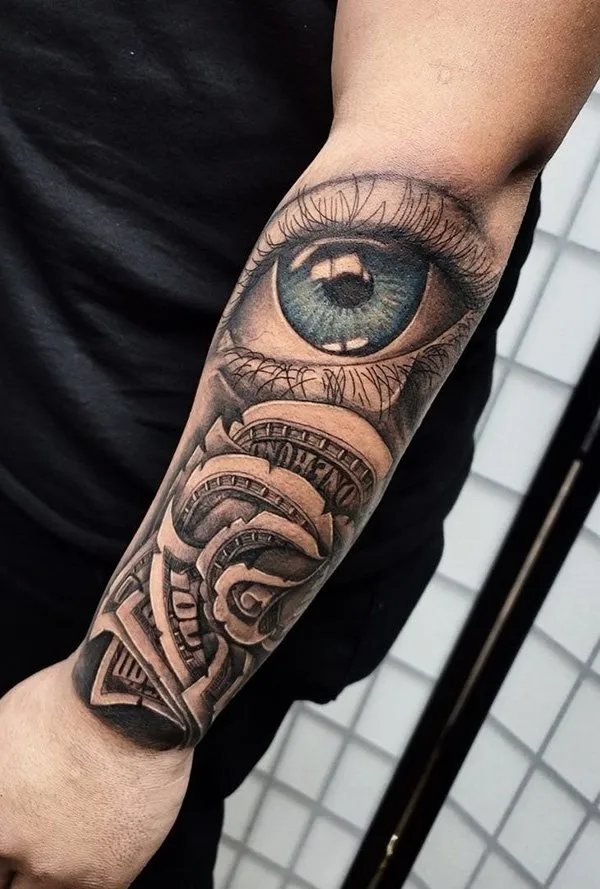


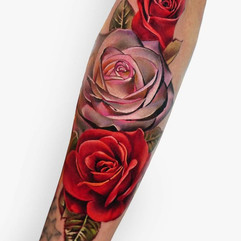


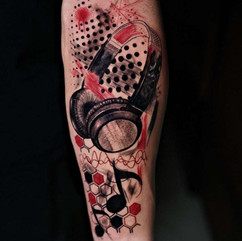


Yes! Placement affects both pain and timing:
Outer Forearm
Time factor: Standard timing
Why:
Meatier area (more muscle, less nerve density)
Flatter surface (easier to work on)
Less sensitive (clients sit better)
Pain level: 3-5/10 (moderate, manageable)
Inner Forearm
Time factor: May take 10-20% longer
Why:
More sensitive (more nerve endings)
Clients need more breaks
Artist may work more slowly/carefully
Thinner skin
Pain level: 5-7/10 (more intense, especially near elbow crease)
Wrist Area
Time factor: Slower, more careful work
Why:
Very delicate, thin skin
Bony (more painful)
Requires precision
Limited space for artist's hand placement
Pain level: 6-8/10 (quite painful for many)
Wraparound Designs
Time factor: Add 20-30% to estimates
Why:
Requires multiple positioning changes
Artist works on different angles
More awkward positions
Client repositioning takes time
Example: A design that would take 4 hours on outer forearm might take 5-6 hours wrapped around
Single Session vs. Multiple Sessions
When can you do it all at once, and when should you split it up?
Single Session Tattoos
Best for:
Small to medium pieces (1-5 hours max)
Simple designs
People with good pain tolerance
First-timers testing their endurance
Advantages:
Done in one go
No waiting between sessions
Less total cost (usually)
Immediate satisfaction
Realistic single-session limit: Most people max out at 4-6 hours
Multiple Session Tattoos
Required for:
Large pieces (6+ hours total)
Full or half sleeves
Extremely detailed work
Anyone with lower pain tolerance
Typical session structure:
Session 1 (4-6 hours):
Stencil application and approval
Outline and main structural elements
Initial shading on focal points
Healing period: 4-6 weeks
Session 2 (4-6 hours):
Continued shading
Secondary elements
Background work
Healing period: 4-6 weeks
Session 3 (3-5 hours):
Color application (if color tattoo)
Final details
Touch-ups on previous work
Healing period: 4-6 weeks
Session 4 (if needed, 2-3 hours):
Final touch-ups
Any areas that need more saturation
Why Multiple Sessions Are Better for Large Work
Skin fatigue:
After 4-6 hours, skin becomes swollen and less receptive
Quality of ink absorption decreases
Risk of blowouts increases
Artist fatigue:
Even experienced artists lose precision after many hours
Quality > speed always
Client endurance:
Pain tolerance decreases over time
Mental fatigue is real
Better to come back fresh
Healing quality:
Smaller sections heal better
Less total trauma to tissue
Reduces scarring risk
What Actually Happens During Your Tattoo Session
Understanding the timeline helps set realistic expectations:
For a 4-Hour Forearm Session
30-45 minutes: Setup and stencil
Greeting, discussing design
Artist prepares workspace, inks, tools
Stencil application, placement approval
Adjustments if needed
Explaining session plan
2-2.5 hours: Outline phase
Main outlines applied
Structural elements defined
Most painful part for many (depends on design)
Short breaks every 45-60 minutes
15-30 minutes: Break
Bathroom, snacks, stretching
Artist cleans/changes needles if needed
Mental reset
1-1.5 hours: Shading begins
Initial shading and depth
Texture work
Detail refinement
30 minutes: Wrap-up
Final touches
Cleaning and bandaging
Aftercare instructions
Booking next appointment (if needed)
Payment
For a 6-8 Hour Marathon Session
Add:
Lunch break (30-60 minutes)
Additional short breaks (every 1-2 hours)
More extensive shading/coloring work
Possible second wind energy-wise or total exhaustion
Reality check: By hour 6-7, you're TIRED. Both physically and mentally.
How to Prepare for Long Tattoo Sessions
Want to maximize your sitting time and comfort?
Night Before
Do:
Get 8+ hours sleep
Hydrate well
Avoid alcohol (thins blood, increases bleeding)
Eat a good dinner
Lay out comfortable clothes
Don't:
Drink alcohol
Take blood thinners (aspirin, ibuprofen)
Stay up late stressing
Day Of
Do:
Eat a substantial meal 1-2 hours before
Bring snacks (protein bars, fruit, crackers)
Bring water bottle
Wear loose, comfortable clothing with easy access to forearm
Arrive 10-15 minutes early (use bathroom!)
Bring entertainment (headphones, podcast, music)
Bring phone charger
Don't:
Show up hungry or hung over
Wear tight sleeves
Bring chatty friends (unless artist is okay with it)
Take caffeine if you're jittery (increases bleeding)
During Session
Do:
Communicate with your artist (need breaks? Speak up!)
Stay hydrated
Eat snacks when offered breaks
Breathe deeply during painful moments
Stay relatively still
Focus on breathing or distraction
Don't:
Hold your breath (increases pain perception)
Jerk or flinch suddenly
Drink alcohol during session
Constantly check progress (let artist work!)
Session Length Recommendations by Experience
First tattoo: Cap at 2-3 hours maxSecond/third tattoo: 3-4 hours reasonableExperienced: 4-6 hours doableHeavily tattooed: 6-8+ hours possible (if you know your limits)
Cost Implications: Time = Money
Understanding the time-cost relationship:
Hourly Rates
Varies by:
Geographic location
Artist experience/reputation
Shop minimum
Typical ranges:
Apprentice/New artist: $80-$120/hour
Mid-level experienced: $120-$180/hour
Established artist: $150-$250/hour
Master/Famous artist: $250-$500+/hour
Shop Minimums
Most shops have minimums regardless of time:
Typical minimum: $80-$150
High-end shops: $200-$300
This means a 30-minute tiny tattoo might still cost $100-$150.
Quick Cost Calculations
Small forearm (2 hours at $150/hour): $300Medium piece (4 hours at $150/hour): $600Half sleeve (12 hours at $150/hour): $1,800Full sleeve (20 hours at $200/hour): $4,000
Flat Rate vs. Hourly
Some artists offer project rates for large pieces:
Advantages:
Know total cost upfront
May save money on long projects
No stress about hourly time
Disadvantages:
Less flexibility
Usually non-refundable deposits
Tips
Standard tipping: 15-20% of session cost
For a $600 session, tip $90-$120
Frequently Asked Questions (FAQ)
How long does a small forearm tattoo take?
A small forearm tattoo (2-4 inches) typically takes 1-3 hours in a single session. Simple designs like small symbols, minimal text, or basic outlines take 1-2 hours. More detailed small pieces with shading or color take 2-3 hours. Factors affecting timing include design complexity (simple line work is faster than detailed shading), color vs. black and grey (color adds 20-30% more time), and artist speed. Most small forearm tattoos are completed in one sitting with no return visit needed.
How long does a full forearm sleeve take?
A full forearm sleeve (wrist to elbow, completely wrapped around) typically takes 15-25 hours total, spread across 3-6 sessions over 4-9 months. Session breakdown: Session 1 (4-6 hours) covers outline and main elements, Session 2 (4-6 hours) handles initial shading, Session 3-4 (3-5 hours each) complete background and details, with final sessions for color and touch-ups. You must wait 4-6 weeks between sessions for healing. Complex styles like biomechanical or color realism may take 25-30+ hours, while simpler traditional styles might complete in 15-20 hours.
Can you get a forearm tattoo done in one session?
Yes, but it depends on size and your pain tolerance. Small to medium forearm tattoos (1-5 hours total) can definitely be completed in one session. However, large pieces, half sleeves, or full forearm sleeves requiring 6+ hours should be split into multiple sessions because: skin becomes swollen and less receptive after 4-6 hours (ink doesn't absorb as well), pain tolerance decreases significantly, both client and artist experience fatigue affecting quality, and healing is better when done in sections. Most people's realistic single-session limit is 4-6 hours maximum.
How long does a forearm tattoo take to heal?
Initial healing takes 2-4 weeks, but complete healing takes 2-3 months. Timeline: Days 1-3 (redness, swelling, oozing plasma), Days 4-7 (scabbing and peeling begins), Days 7-14 (continued peeling, itching), Days 14-21 (surface healing complete, can return to normal activities), Weeks 4-12 (deep skin layers continue healing, final settling of ink). You can typically get your next tattoo session after 4-6 weeks. Healing speed depends on tattoo size (larger = longer), aftercare quality, placement (forearms heal relatively fast), and your overall health.
What's the most painful part of a forearm tattoo?
Pain varies by location: Inner forearm and wrist area (6-8/10 pain) hurt most due to thin skin, more nerve endings, and proximity to bones. The elbow ditch (inner elbow crease) is especially sensitive. Outer forearm (3-5/10 pain) is much more tolerable with meatier muscle and fewer nerve endings. The pain also depends on technique: outlining typically hurts more (feels like scratching/cutting), shading is more tolerable (dull pressure sensation), color packing varies (can sting). Most people find forearm tattoos manageable overall—it's one of the less painful locations compared to ribs, feet, or spine.
How much does a forearm tattoo cost based on time?
Cost directly correlates with time and artist rates. Typical hourly rates: $100-$180/hour (average artist), $150-$250/hour (established artist), $250-$500+/hour (master/famous artist). Real examples: Small tattoo (2 hours at $150/hour) = $300, Medium piece (4 hours at $150/hour) = $600, Half sleeve (12 hours at $150/hour) = $1,800, Full sleeve (20 hours at $200/hour) = $4,000. Most shops have minimums of $80-$150 regardless of time. Geographic location significantly affects pricing—major cities cost more than small towns. Always factor in 15-20% tip.
Does a forearm tattoo take longer if it wraps around?
Yes, wraparound designs typically take 20-30% longer than designs on just one side of the forearm. Reasons: requires multiple positioning changes (you have to rotate your arm repeatedly), artist works at different angles (some awkward), more surface area to cover, takes time to adjust and reposition, and continuity across angles requires careful planning. Example: A design that takes 4 hours on the outer forearm might take 5-6 hours wrapped completely around. Full sleeves accounting for complete coverage take significantly more time than partial pieces of the same detail level.
How long should you wait between forearm tattoo sessions?
Wait 4-6 weeks minimum between sessions to allow proper healing. Why this timing: first 2-3 weeks handle surface healing (scabbing, peeling), weeks 3-4 complete epidermal (top skin layer) healing, weeks 4-6 allow dermal (deep skin) healing, and ensures ink has fully settled. Tattooing over incompletely healed skin risks: poor ink retention (healing skin won't hold new ink well), increased scarring, infection risk, and blowouts. Some artists prefer 6-8 weeks for large, heavily worked areas. Never rush healing to finish faster—it compromises final quality.
What forearm tattoo styles take the longest?
Longest styles (for equivalent size): Color realism (most time-intensive due to color blending, multiple layers, photorealistic detail), biomechanical (extreme detail with gears, 3D shading, precision work), Japanese traditional full sleeves (large scale with extensive background elements), and detailed dotwork/geometric (thousands of individual dots, precise patterns). Fastest styles: Minimalist line work (simple, clean lines only), traditional/old school (bold outlines, solid fills, efficient technique), and simple blackwork (solid black areas without complex gradients). Example: A 6-inch tattoo could take 3 hours in traditional style or 10+ hours in color realism.
Can an artist give you an accurate time estimate?
Experienced artists can give fairly accurate estimates, usually within 1-2 hours for large projects. However, variables make exact timing impossible: client pain tolerance (frequent breaks add time), skin type and condition (some skin takes ink differently), design changes during session (minor adjustments), and unexpected challenges. Good artists will say "approximately 4-6 hours" rather than "exactly 5 hours." For large projects (sleeves), estimates improve after the first session when the artist understands how your skin takes ink and your sitting ability. Always trust your artist's estimate over generic internet advice—they know their speed and your specific design.
Final Thoughts
Okay, let's wrap this up with some real talk: there's no universal answer to "how long does a forearm tattoo take?" because your tattoo is unique. It's not like ordering a burger where you know it'll be ready in 10 minutes—this is custom art being permanently etched into your skin!
But here's what you should take away from this guide:
Small, simple designs: 1-3 hours, usually one session, totally doable.
Medium complexity: 2-5 hours, might be split but often one sitting.
Large, detailed pieces: Plan for multiple sessions. Don't try to marathon through 12 hours in one day—you'll hate life, your artist will be exhausted, and the quality will suffer.
Full sleeves: This is a commitment! 15-25+ hours over months. Embrace the journey rather than rushing to finish.
The most important thing? Choose your artist based on quality, not speed. A fast artist who rushes through your piece will leave you with mediocre work that you'll regret. A methodical artist who takes their time will create something you'll proudly show off for decades.
And honestly? Those hours in the chair become part of the story. You'll remember the conversations, the playlists you listened to, how you powered through that tough shading session, the excitement of seeing it come together. The time invested makes the final result even more meaningful.
So take a deep breath, trust the process, communicate with your artist about realistic timelines, prepare properly for your sessions, and get ready to wear some amazing art on your forearm.
Time well spent = ink well worth it. ⏱️🖤✨
References
See More: ⤵
Nipple Tattoos: A Comprehensive Guide to Areola Reconstruction and Decorative Designs
Hip Tattoos: The Ultimate Guide to Choosing and Caring for Your Sexy Hip Ink
Divergent Tattoos: A Comprehensive Guide to Choosing, Placing, and Caring for Your Ink
Forearm Tattoos for Women: Styles, Inspiration, and Considerations
Sleeve Tattoos for Men: The Ultimate Guide to Designing and Rocking Your Ink
Best Friend Tattoos: Celebrating the Unbreakable Bond of Friendship
Wave Tattoo: Unleashing the Power and Beauty of the Ocean on Your Skin
Wrist Tattoos: Meaningful Designs and Ideas for Your Next Ink
Halloween Tattoos: Spooky and Creative Ideas for Ink Enthusiasts
Japanese Tattoo: Exploring the Rich History and Symbolism of Irezumi
Infinity Tattoo Ideas: Endless Inspiration for Your Next Ink
Cat Tattoos: Meanings, Designs, and Ideas for Feline-Inspired Ink
Feather Tattoo: Meanings, Designs, and Ideas for Your Next Ink
Lotus Flower Tattoo: Meanings, Designs, and Ideas for Your Next Ink
Polynesian Tattoo: Unraveling the Meanings and Traditions Behind the Ancient Art
Birth Flower Tattoos: Celebrating Your Birthday with Floral Ink
Forearm Tattoos for Women: Embracing Femininity and Self-Expression
Head Tattoos for Guys: Bold Designs and Crucial Considerations
Forearm Tattoos: Unleashing Your Personal Style on Skin Canvas
Arm Tattoos: Your Ultimate Guide to Inked Sleeves and Beyond
Phoenix Tattoo: Rising from the Ashes with Stunning Design Ideas
Heart Tattoo: Meanings, Designs, and Ideas for Your Next Ink